
byChrisWhite – 2014
In the low-slung belly of Nashville where Murfreesboro Pike once loped past the iron maw of Berry Field, long before the tarmac bred its silver-plated swarm of jetliners and business-casual itinerants, there stood a building the color of dried blood and bad memory. Central State Hospital. A name that rang with the dull clang of officialdom, a bureaucratic cipher for madness and abandonment. We gave it a nickname, as children do, to dull the terror. We called it Central State. Simple. Familiar. But names don’t soften bricks or bleach the ghosts and blood from concrete.
It was the sort of place that existed more in rumor than in map. You didn’t go there. You were sent. Disobedient children, fidgety boys with jackrabbit knees and mouths that couldn’t stay shut, were warned of it by mothers who’d grown weary of switches and counting to ten. Keep that up and I’ll send you to Central State. And we believed them. How could we not? It loomed. It existed. It watched.
When I was seventeen, or thereabouts, my cousin David White worked security there. He had keys and swagger and the unspoken desire of every young man to impress another with access to forbidden terrain. One summer night, drawn less by bravery than by boredom, I followed him over a chain-link fence and into the bowels of that institution. The air changed. Grew damp, metallic. Even the darkness there was thicker, as if it had mass.
We crept through corridors lined with doors that had not been opened in years, if ever. The walls were green with institutional paint and time. The kind of green that once signaled order but now only hinted at decay. Our flashlights skittered across rusted gurneys, overturned chairs, the remnants of paper files turned to pulp. It felt less like trespassing and more like time travel. And then we found the cells.
Beneath the main floors, in the belly of the building, there were rooms hewn from old brick and despair. Iron rings embedded in the walls. Chains still attached. Shackles. Real ones. Not props. Not relics. Not metaphor. Places where men and women had been held, not because they were dangerous, but because they were inconvenient. The mad, the melancholic, the strange. The ones who moaned too loudly or refused to eat.
In one of those rooms, standing ankle-deep in the silt of years, I felt the laughter die in my throat. I saw, in my mind, not stories but lives. I saw the man who clawed at the door until his nails were gone. The woman who hummed for ten years to keep the silence from winning. I saw my brother.
Not then, of course. Not yet. Back then, he was still just my older brother. Wild-eyed, brilliant, unknowable. But years later, when his mind began to falter and warp, when the world tilted and he lost his footing on the slick terrain of thought, I remembered that room. And I wondered what century we were in, really. Because by then, Central State was gone. Bulldozed. Paved over. Replaced by DELL, a corporate compound of blinking lights and ergonomic chairs. Progress, they called it.
But progress has a way of erasing without replacing. Of cleansing the visible stain and leaving the wound beneath to fester. We closed the old asylums, we celebrated the end of cruelty. But we forgot to ask where the afflicted would go. My brother went to jail. Then to a halfway house. Then to jail again. Diagnosed, discharged, detained. Each place colder than the last. None built for healing. Each one quieter about its failure.
That’s what we do with our vulnerable today. Jail. We put our love one’s who are alone to their thoughts, alone to the world, alone to rational thinking; we put them in our jails.
People talk about mental illness as though it were a weather pattern. Unpredictable, inconvenient. Something to be endured from afar. But when it moves into your home, when it sleeps under your roof and eats from your fridge and forgets your name, fights with you constantly, makes you afraid for your family; it ceases to be abstract. It becomes a weight. Not because of the person who suffers, but because of the absence of help. Real help. Not pills and pamphlets. Not another number to call when the crisis crests. But shelter. Structure. Care.
We dismantled the old system. We razed the bricks. But we build computers in its place.
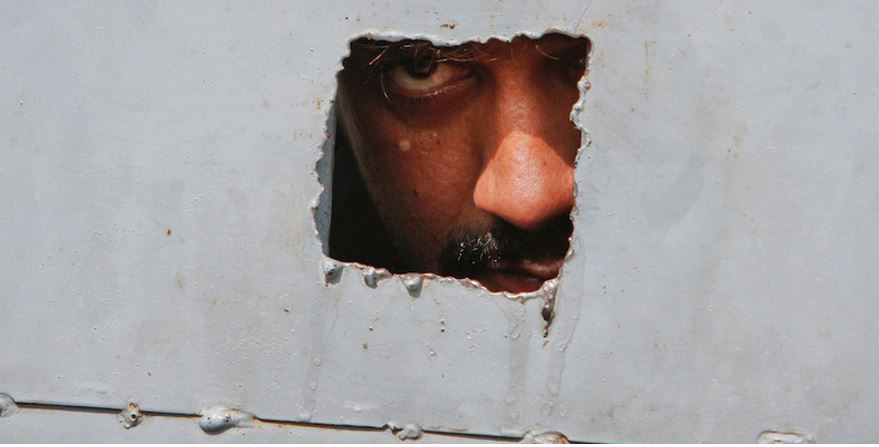
The ghosts of Central State are not the patients who died there. They are the ones still walking among us, untreated, unmoored, invisible until they become inconvenient enough to cage. We did not end the asylum. We just changed its zip code. From Murfreesboro Pike to county jail. From padded rooms to prison blocks with real monsters inside. We put our vulnerable in places that make them more vulnerable.
And the irony—the bitter, blistering irony—is that we did it in the name of progress. We said never again, and then we looked away. We cut funding and claimed mercy. We shuttered buildings and declared ourselves humane.
But a humane society does not let its sick sleep in alleys and die in holding cells.
I think often of that night. Of the chains. Of the smell. Of the silence that was not silence, but history holding its breath. I think of my brother in a jail cell, staring at a wall not unlike the one I saw in Central State. And I think of all the things we could have done. Should have done. Might still do.
We need places. Not warehouses. Not cages. Places where care is more than an idea.
We need to accept that the condition will never result in the outcome we want. It’s horrible, and can be improved to tolerable, but never wonderful. We need to stop pretending that justice and mercy are opposite ends of a line. We need to build something. Not again. But anew.
We owe it to the ones who never got out.
We owe it to the ones still trying.
We owe it to the boy who once wandered through that place thinking it was only a ghost story.
We owe it to the man he became.

Share this:
- Share on X (Opens in new window) X
- Share on Facebook (Opens in new window) Facebook
- Print (Opens in new window) Print
- Email a link to a friend (Opens in new window) Email
- Share on LinkedIn (Opens in new window) LinkedIn
- Share on Reddit (Opens in new window) Reddit
- Share on Tumblr (Opens in new window) Tumblr
- Share on Pinterest (Opens in new window) Pinterest
- Share on X (Opens in new window) X
- More
 Ramblings & Revelations
Response
[…] Now, What?. […]
LikeLike