
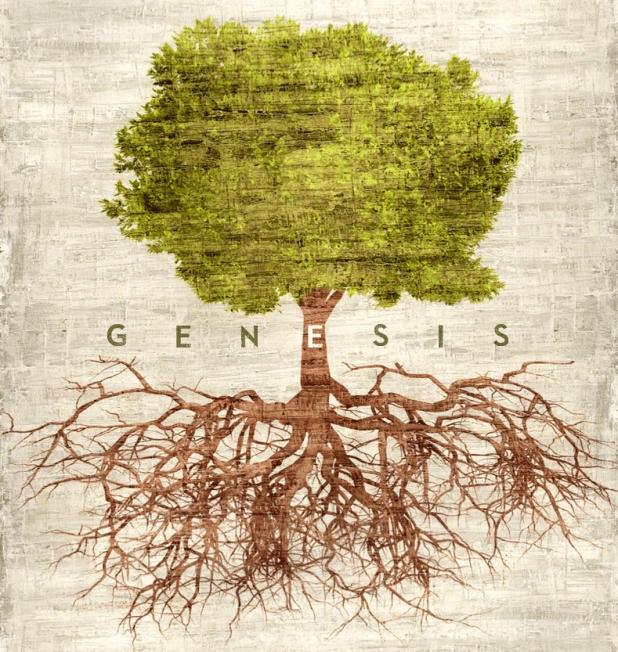
byChrisWhite – 2018
I reckon there’s nothing quite like an obsession with one’s own bloodline, that inexhaustible pursuit of ghosts, of names carved into stone and faded into paper, of men and women who lived and toiled and died before I was ever a thought. Maybe it’s folly, maybe it’s wisdom, but when you start peeling back the years, following the jagged lines of lineage like a trail cut through deep woods, you find yourself standing in places you never meant to go. And if you linger long enough, if you let the weight of history settle on your shoulders like a well-worn coat, you’ll start to feel it—that uncanny pull, the sharp and certain understanding that you are not simply yourself, not just one solitary soul adrift in the present, but a culmination, a compendium, the last chapter in a book still being written.
They say you are made of what you carry, but that’s not true. Not entirely. You are made of what you inherit in silence, what you never asked for, what you never knew to refuse. And so it begins with a name, a story overheard on a porch, half-whiskey and half wishful thinking, something stitched together in the mouths of old men who spit tobacco and speak of glory as though it owed them something. I was raised on such names. And I believed them.
Genealogy is dissection. It lays you out, sinew and bone, cutting through the polite fictions, the stories embroidered with pride, and exposing the raw, unvarnished truth. The triumphs gleam, sure enough, but so do the stains, the half-whispered scandals, the lines of ink that smudge and blur in ways no one wants to acknowledge. I’ve spent long nights hunched over brittle records and sun-bleached ledgers, sifting through names that meant nothing until, suddenly, they did. I’ve traced branches that stretch across oceans and through centuries, each one leading me closer to an undeniable, immutable truth: we are all, every last one of us, bound by this great, tangled root system, a web of breath and blood and survival.
Papaw White had a way of sitting like a man born to reckon with the wind. One boot balanced on the top rail of the porch, the other rooted like a threat. Smoke from his pipe curled not like a halo but a signal, rising into the reddening sky of late afternoon like a private prayer to a God who never responded in English. He told me once, more than once, but once with the authority of a man retelling scripture, that we were kin to Captain John White of Roanoke. That our blood ran to the edge of the world and then vanished. That we came from men who dared.
I listened. I listened because I was young and because belief is the softest place for a lie to take root.
The Captain was English, of course. Not Scotch-Irish. He died discredited and dry. And no man from Roanoke ever walked these Tennessee hills. But try telling that to a boy who thinks his blood carries a compass, or to an old man who’s convinced the truth is just a story too fragile to endure retelling.
Truth lives in corners. It doesn’t rise like smoke. It seeps. My grandmother—Papaw’s counterweight in all things—she told stories with less swagger and more stillness. Her people, she said, came from Germany. She said it plainly, without adornment, the way someone tells you the time or points out a passing bird. Her voice didn’t rise at the end of sentences. It settled.
Later I would find the truth of it, folded between the brittle pages of shipping logs and burial records. But her truth, like his, was incomplete.
They came from Mitschdorf. A borderland village that woke some mornings French, some mornings German, never fully either. A patch of soil pulled back and forth like a contested blanket; a tug-of-war that lasted centuries. They lived between languages, between loyalties, between the cracks of empire. They were not immigrants, not at first. They were survivors of redefinition.
It is no small thing to be born into a place that changes its name while you sleep. People born of uncertainty, their identity shape shifting like lines drawn in the sand, their national identity shaped by hands that ruled by the decade.
You begin to understand that a name is not a truth. A story is not a person. And family is not a lineage. It is a long and bloody negotiation with history.
I started the climb, this genealogy, this cartography of bones, not to find answers, but to quiet the noise inside me. There is a violence in not knowing. You carry it in the joints, in the rhythms of your breath, in the questions you ask without sound. Who were they, these men and women whose decisions lit the fuse of my becoming?
Their names arrived first. Names like Pfeiffer and Cazeneuve, Coggeshall and Erchtebrech. Names that thudded like ancient bells, names better carved in stone than spoken. Names that belonged in libraries that no longer stood, written in dialects no one dreamed in anymore. Then others, quieter, rounder in the mouth: Simpson, Beaufort, Marcello, Ragland, names that might sit across from you at supper and ask to pass the salt.
I did not belong to one name. I belonged to all of them. Their syllables echoed in my body. Their choices ran in the blood. I was not an individual. I was a consequence.
Four generations and you’ve got sixteen. Great-grandparents, each holding a piece of your face in their palms. Thirty-two beyond that. Sixty-four more. The numbers grow like a tide you cannot outrun. Each one a flickering light in the dark, a brief survival that allowed you to walk into this century wearing shoes and doubts.
One of them was a shoemaker. Another a woman with twelve children, all of whom lived. One was arrested for poaching deer off the land of a nobleman whose name no one remembers. One crossed the Alps barefoot. Another crossed the Atlantic twice. There were those who never crossed anything. Who died where they were born. Who left no letters. Who left no sons.
Among them were Norsemen with axes and bad intentions, Spaniards who kissed silver before they boarded ships, Frankish women who carried ink-stained prayer books through cities now buried. There were Welshmen whose daughters could sing and Englishmen whose sons could not. There were Arabs. There were Jews. There were people for whom belief was a sentence and others for whom it was a song.
Each one was both monster and martyr. Each one a myth made flesh.
The conquistador and the concubine. The bishop and the heretic. The farmer with hands like knots. The orphan who lied his way into a surname.
What they had in common was not geography or grace. It was survival. They endured. Not because they were good. Not because they were brave. Because they had no other choice.
History is not a triumph. It is an accident repeated with conviction.
They survived wars that collapsed countries, plagues that emptied streets. They survived inquisitions and invasions, winters that turned flesh black. They survived betrayal. They survived mediocrity. And the worst of them survived themselves.
Their stories did not always end well. But they ended.
There is no moral arc to inheritance. Only momentum.
And yet, it moves you to learn their names. It rewires the mind. You begin to dream in their geographies. You hear them in the silence between sentences. You sense their hands pressing into your spine when you speak the truth too loud. You see them in mirrors, in moments, in the way you bite your lip when you’re thinking, or the way you mistrust compliments.
You do not become them. You become aware that you always were.
We like to believe we are original. But we are not. We are replicas. Poorly lit copies of people who walked before us, dressed in different fabric, speaking different griefs. Our originality is merely the degree to which we misunderstand our debts.
This knowledge unmoors you. And yet it steadies you too.
Because if you are built of remnants, then you are proof that remnants endure. That failure is not final. That suffering, while brutal, is not unbroken.
The myth of blood purity collapses here. The myth of division. The myth of isolation. You are a host of contradictions. Your veins carry a thousand treaties. Your mind is a parliament of ghosts.
To say I am Scotch-Irish-German is to miss the point entirely. I am not a resume of ancestries. I am not a claim. I am a question left open by time.
I am the child of people who would not have spoken in the same room, much less agreed on the color of the sky. I am the product of wars that never ended. I am the peace that followed.
We are all so many things we cannot pronounce.
And when I look in the mirror, I see them. Not their faces exactly. Not their features. I see the weight of their decisions. I see the path carved by their refusal to lie down.
This is the work of genealogy. Not a chart. Not a tree. But a reckoning.
Because eventually, you come to the part of the past that disgusts you. You find the slaveowner. The murderer. The coward. You find the woman who abandoned her children. The man who forged his brother’s will. The cousin who fought for the wrong cause. And worse, believed in it.
You want to delete them. You cannot.
You want to believe you are better. You might be.
But you are also theirs. They are yours. And so you carry it.
Their sins don’t absolve you. But their grace doesn’t sanctify you either.
What you inherit is not righteousness. It is responsibility.
To know is to decide what to do with the knowing.
So I gather their stories. I stack them like firewood. I burn them for light.
Not to glorify. But to see.
To see that we are not alone. That none of us ever were.
We stand on the accumulated chances of strangers who once held hands with their own destruction and chose instead to walk. We are the residue of their refusal to disappear.
If I am blessed, then so are you. If I am damned, then you are too.
Because the truth is this: we are the same. You and I.
Our details differ. But our origin is shared.
We are stitched together by the same threads. Threads of conquest and hunger, of longing and theft. Threads of impossible love. Threads of names we do not know, languages we no longer speak.
We have spent generations inventing reasons to forget this.
But blood remembers. And memory, once summoned, does not return quietly to its crypt.
You are not a stranger. Not to me. And I am not a stranger to you.
You are a version of me. As I am a version of everyone who ever lived.
We are not alone in our becoming. We are not solitary stars burning in the firmament. We are a constellation, old as fire, shaped by time, named and renamed by every child who looks up and wonders who lit the sky.
And still we burn.


Response
I always love these new thought!
LikeLiked by 2 people