
byChrisWhite – 2025
There are two kinds of people who go to Japan: the ones who dream of cherry blossoms fluttering delicately onto their laps as they sip tea in an ancient temple, and the ones who come to get their ribs realigned by a black belt in a dimly lit dojo. I, dear reader, was decidedly in the latter camp.
For two weeks in Tokyo, I threw myself into the art of getting pummeled, politely, of course, while attempting to soak up the culture in between bruises. The Japanese, being masters of efficiency, have conveniently arranged their country so that one can seamlessly transition from medieval samurai castles to hyper-modern bullet trains in the span of an afternoon, making my journey one of both bodily endurance and existential whiplash.
The Ryokan: A Lesson in Humility
To fully immerse myself in the culture, and to preserve what little remained of my travel budget, I opted to stay in a ryokan, which is much like a European hostel, but with fewer frat boys and significantly more reverence for the concept of personal shame. The ryokan offered the true minimalist experience: tatami mats, sliding paper doors, and a sleeping arrangement that left my spine in direct communion with the floor. I enjoyed it immensely, though I concluded that my wife, a woman of fine tastes and intact lumbar support, might not find it quite as charming.
The best part, however, was the communal hot bath, or onsen. There is a ritual to using these baths that a well-mannered foreigner must observe, namely: thou shalt not enter the water without showering first. The bath is for soaking, not for scrubbing, and failure to follow this sacred commandment will earn you the kind of disapproving glares that transcend language barriers.
Tokyo: Where the Past and Future Collide, Sometimes Literally
Tokyo is a city where you can visit a shrine built before Vikings were a thing, and then board a train so fast it will rearrange your molecules. The bullet train, or shinkansen, is a marvel of human ingenuity, designed to transport passengers with all the smoothness and precision of a samurai blade slicing through the space-time continuum.
In Noda-Shi, I visited the Sakuragi Shinto Shrine, a place so ancient it makes America look like an infant swaddled in fast-food wrappers. Founded in 851, this shrine is dedicated to the warrior arts and is famed for cherry trees that bloom at whimsically unpredictable times, as if even nature itself respects Japan’s sense of mystery.
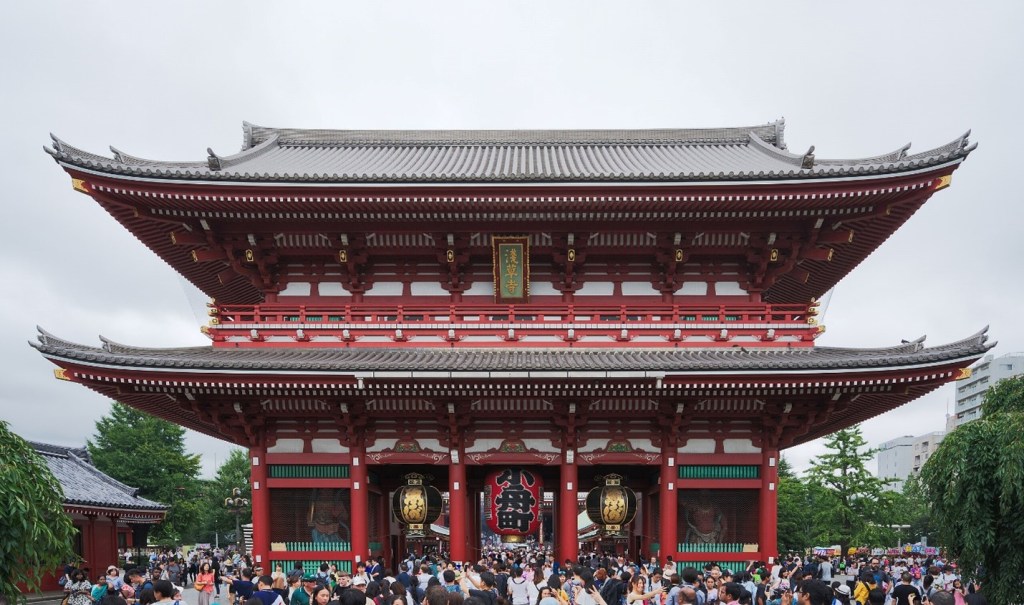
Then there was Senso-ji, Tokyo’s oldest Buddhist temple, completed in the year 645. With its five-story pagoda and gates that could make a giant feel small, it is also the most visited religious site on Earth. When you stand beneath its eaves, watching the sea of humanity flow in and out, you begin to suspect that at least half of those 30 million visitors are all here at the same time.
The Tokyo Budokan: A Place of Beautiful Brutality
One of my most exhilarating visits was to the Tokyo Budokan, not to be confused with the famous concert arena where rock bands go to achieve immortality. No, this was the real Budokan, a modern temple of martial arts where the architecture is as precise as the movements of the warriors who train there. The entire structure seems to hum with an energy that suggests if you are not here to improve yourself, you are wasting precious oxygen.
My own dojo, which has quite the international presence, rents one of the grand training halls here on Sundays, allowing hundreds of students to practice their art. The exterior, with its diagonal motifs and frozen prismatic forms, is less a building and more an intricate piece of origami brought to life. It is a place where sweat, discipline, and the occasional ego-crushing defeat come together in perfect harmony.

Shopping: A Contact Sport
Tokyo is also the capital of shopping, an activity that in some districts resembles a full-contact sport. If you are unprepared for Shinjuku Station, the busiest train station in the world, you will find yourself swept away in a current of humanity so dense it makes the Mississippi River look lazy.
Ginza, the premier upmarket shopping district, is where the sidewalks themselves appear to breathe, pulsing with waves of finely dressed pedestrians who seem to have emerged from a fashion catalog. The experience of crossing a Ginza intersection is akin to a synchronized Olympic event, wherein thousands move in perfect unison, and you, the bewildered foreigner, pray not to be trampled underfoot.
Harajuku, meanwhile, is a world of its own. It has a split personality: Omotesando, an elegant avenue lined with boutiques, and Takeshita Dori, where Japan’s youth flaunt fashion choices that defy both gravity and conventional logic. If you have never seen a man dressed as a Victorian doll drinking bubble tea alongside a woman in full samurai regalia, you have simply not lived. Don’t ask about the vending machines.
Getting Around Without Losing Your Mind
Tokyo’s rail system is a marvel, provided you are not intimidated by a map that looks like it was designed by a hyperactive child with a box of colored pencils. Fortunately, modern technology, namely, Google Maps, spared me from wandering the subterranean labyrinths forever.
Japan, despite its relentless pace, is also one of the safest places on Earth. The violent crime rate is so low that I did not see a single street cop during my entire two-week stay. The level of politeness here is such that if you were to be mugged, the assailant would likely return your wallet with a bow and a note of apology for the inconvenience.
The Cost of Adventure
Contrary to popular belief, traveling in Japan does not require you to mortgage your house. A budget-conscious traveler can find a decent ryokan for as little as 2,000 Yen ($14 USD), with private rooms starting around 4,500 Yen. Meals range from 750 to 1,500 Yen, and let me tell you, a bowl of ramen in Tokyo is a religious experience unto itself.
The Takeaway: A Journey Worth Every Bruise
My two weeks in Tokyo were not just a physical endeavor but a philosophical one. The martial arts training bruised my body, but the city itself enriched my spirit. The shrines whispered of centuries past, the shopping districts roared of modern ambition, and the people, gracious, disciplined, and ever polite, reminded me that there is honor in both combat and courtesy.
If you ever find yourself in Japan, I implore you to embrace the chaos, bow deeply, soak in the hot baths (after showering, of course), and let the experience leave its mark upon you, hopefully just figuratively, but if you step into a dojo, I make no promises.

 Ramblings & Revelations
Responses
Your two weeks sounds wonderful. I get glimpses of other cultures and countries through bloggers. This was great. Thanks for sharing.
LikeLiked by 2 people
Your support is much appreciated.
LikeLiked by 1 person