
byChrisWhite – 2025
It was a fine idea, this pilgrimage of ours across England, though it must be said that fine ideas often lead to trouble when mixed with maps, foreign currency, and the English tendency to name roads after pastures, hedge rows, and the occasional misplaced vowel. We had gallivanted through London’s high-stakes theater of crosswalks, braved the baffling druidic geometry of Stonehenge, and made reverent faces at Shakespeare’s haunts in Stratford-upon-Avon, all the while dodging tea kettles that threatened to scald us into civility. Scotland had been touched upon briefly, long enough for a bit of Scotch Whiskey and an earful about the Jacobites, and Wales, well I don’t have enough time or ink right now, but I promise I will later. But York, ah, York was something unique.
York, an old city by all standards, wears its history like a well-loved coat, threadbare in places but still stylish enough to impress the company. The Romans, Vikings, Anglo-Saxon’s and Normans all left their particular scratches and scuffs on the place, and we were eager to inspect the damage. Our lodgings, at the Delta Hotels York (A Marriott Property), were perfectly positioned beside the Knavesmire horse racetrack, which provided no horses during our stay but ample room to speculate upon races that might have been. The accommodations were pleasant, the service impeccable, and the breakfast, ughm, a noble attempt at sustenance that fell somewhere between austerity and potted meats.
York Minster: Where God Charges Admission
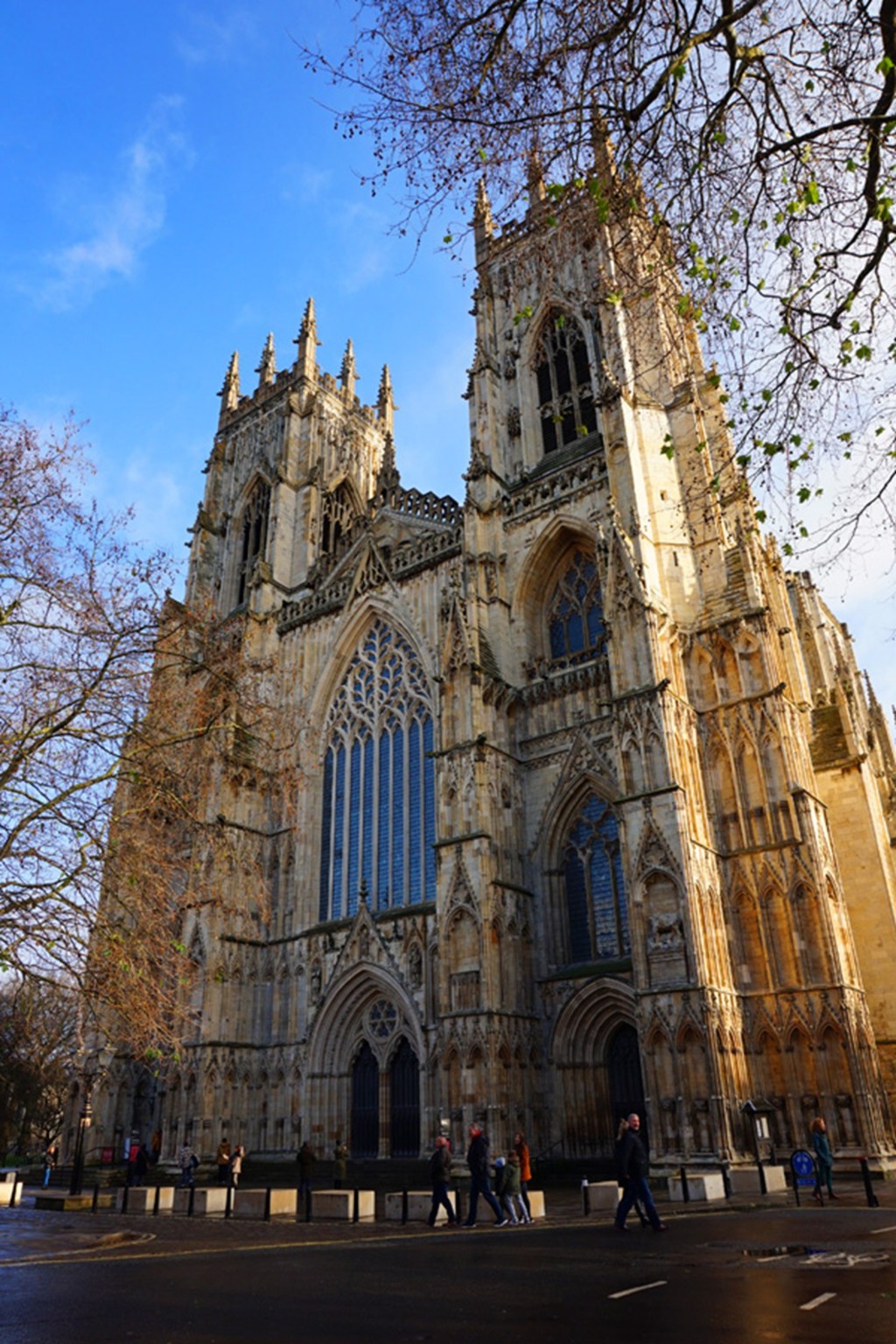
A visit to York is incomplete without standing in open-mouthed admiration before York Minster, the architectural behemoth that looms over the city like a benevolent yet budget-draining deity. The cathedral, in its current incarnation, begun in the 13th century, is a masterpiece of Gothic excess, with the largest collection of medieval stained glass in existence, an accolade that surely inflates its self-importance. It is built on top of older sacred sites, including a Roman temple, which means that for centuries, the devout of various creeds have been jostling for elbow room in the same spiritual real estate.
Once inside, we wandered its cavernous halls, pretending we knew what a flying buttress was, and marveled at the relics on display, golden crosses, saintly femurs, and enough ecclesiastical finery to make even the most modest bishop reconsider his vows. The choir was practicing as we entered, an ethereal sound that made one briefly consider repentance before dismissing the notion as premature. For a mere £12, a sum York Minster insists lasts for a year but which, in practical terms, lasts precisely as long as it takes for you to walk back out the front door, you too can witness this miracle of stone and stained glass. The upkeep, we were informed, runs a shocking $23,000 per day, a sum that suggests either divine extravagance or some very well-fed pigeons.
Jorvik Viking Centre: History on Rails
As Americans, we have a particular fondness for history that involves conquest, pillaging, and the occasional well-placed horned helmet. The Jorvik Viking Centre, therefore, was a natural stop. The crown jewel of the experience is a ride, a legitimate, moving ride, that takes you through a reconstructed Viking settlement, complete with animatronic Norsemen engaged in the everyday business of surviving the Dark Ages; no big deal. It is an impressive feat, and the attention to detail is commendable, down to the dirt under the fingernails of the traders and the suspiciously malodorous scent of an authentic Viking street.
The pinnacle of the exhibit is an elderly Viking woman frozen mid-stride in her attempt to cross the road, whom we later meet in her less animated form, her skeleton, thoughtfully displayed nearby. It is a sobering juxtaposition, though one wonders whether she would have appreciated the attention, having clearly failed in her last known ambition of getting to the other side.
The Shambles: The Original Meat Market

There is no leaving York without paying homage to The Shambles, a medieval street so crooked and narrow it appears to have been designed by a drunk architect with a grudge against personal space. The timber-framed buildings lean toward each other conspiratorially, their upper stories nearly touching, as though they are whispering about the hapless tourists below.
It is here that you find shops of all kinds, some selling pies, others hawking wizard-themed merchandise to a Harry Potter-obsessed clientele that refuses to acknowledge J.K. Rowling’s repeated claims that she had never set foot in York before dreaming up Diagon Alley. The Shambles once housed dozens of butchers, who cheerfully displayed their wares in the open air, their tables groaning under the weight of freshly dissected livestock. The street was, at one time, known as the Great Flesh Shambles, which is both an accurate description and a title one might reserve for a poorly run dinner party.

The remnants of that grisly past can still be seen in the form of the narrow gutters that run alongside the street, originally designed to whisk away blood and offal with each passing rain. One can only imagine the sights and scents of 19th-century summers, when thirty-one butchers lined this street, each vying for the attention of passersby with enthusiastic displays of hanging meat and a general disregard for horse flies and refrigeration.
Tucked into the folds of The Shambles is a shrine to Margaret Clitherow, a butcher’s wife who was canonized for harboring Catholic priests during the reign of Queen Elizabeth I. She met an unfortunate end by way of being pressed to death, a method of execution that suggests the English once harbored an unwholesome obsession with flattening things. Her former home, now a point of pilgrimage, is marked by a small but reverent tribute, reminding visitors that history here is not just charming, it is also profoundly and occasionally alarmingly real.
The Art of Wandering
The true joy of York, however, lies not in its official attractions, but in its streets, the winding alleyways, the forgotten corners where history lingers like an old storyteller waiting for an audience. We spent hours simply wandering, pausing in shadowed courtyards and along ivy-clad walls, listening to the distant chime of church bells and the occasional grumble of a discontented goose.
There is something deeply comforting about York, a city that has been standing its ground for nearly two millennia, watching empires rise and fall while its own walls remain steadfast. It is a place where the past is not merely preserved but lived, where history peers out from every doorway and cobblestone, demanding acknowledgment and, occasionally, a modest admission fee.
Our visit was aided by the good people of Gate One Travel, who managed to usher us through the labyrinth of English landmarks with efficiency, charm, and only the occasional loss of luggage (kidding). Their recommendations were invaluable, their advice seasoned with the knowing wisdom of those who have watched many an eager traveler misjudge the weight of a British downpour.
Final Thoughts
York is, in every sense, a city of contrasts, sacred and profane, refined and rough-edged, modern in its conveniences but medieval at heart. It is a place where you can stand beneath a thousand-year-old archway while checking the weather on your smartphone, where history is not confined to books but spills into the streets, demanding your attention.
Would I return? In a heartbeat. Preferably in autumn, when the air is crisp, the crowds are thinner, and the only concern is the growing suspicion that, should one linger too long in York, one might never quite leave.
 Ramblings & Revelations
Responses
What a lovely tour you have taken me on! Thank you for allowing me to visit vicariously.
LikeLiked by 1 person
Thank you for all your encouragement Violet.
LikeLiked by 1 person
How beautiful and quaint!
LikeLiked by 2 people
Thank you Dawn.
LikeLike