
by J.C. White – 2025
The great author from Georgia, Flannery O’Connor, once said in response to a question about why Southerners write about freaks so well, “because we in the South are still able to recognize one.” She wasn’t being cruel; she was being honest. The South has always known how to call a thing what it is, whether that thing’s a mule gone lame or a preacher gone crooked. And maybe that’s why, in 2025, the rest of America seems to move further and further away from figuring us out.
See, we don’t just recognize the grotesque, distorted, and deformed, we live amongst it, laugh at it, and sometimes elect it to public office. But we also know when somebody’s playing us for fools. We ain’t near as dumb as you-un’s think we is.
The Cartoon South
If you were to believe Hollywood or Tweets on X, the South is nothing but a collection of porch swings and rusted pickups, peculiar cousin-uncles named Bubba, and First Baptist Churches where the men handle serpents and the choir sings Trump tweets in four-part harmony. That cartoon is useful, yes, it serves the people in all the other regions by propping up their own self-sophistication and giving them someone else to laugh at.
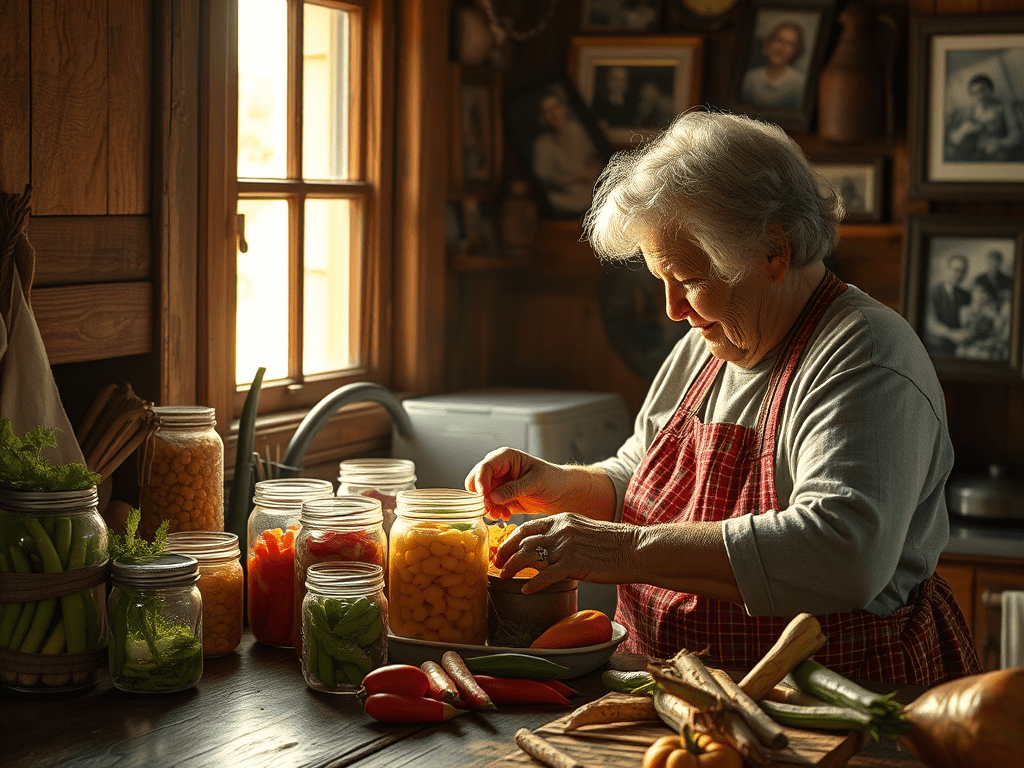
But caricature is a lazy man’s truth and self-realization is a lost art. The real South is not a stage set. It is a grandmother canning beans in her kitchen, a cemetery on the hill where six generations lie, a bean field that still feeds a family. It’s farmers who quote Cormac McCarthy, welders who read David Foster Wallace, lawyers who can still sing “Amazing Grace” straight through without looking at the hymnal. We are educated and uneducated, devout and doubting, conservative and liberal. Complexity confuses city folk, so they paint us as one-note freaks and call the picture finished.
The Real South
The South was never the idyllic its courtesies suggested. Even as a child I felt the unease beneath its gentility, the truths never discussed, got buried deep as bones in clay. That war, THE war, had torn it open, left wounds that would not close. But Southerners are a different breed of American. Different stock. Are our own kind, set apart from the Yankee altogether.
I don’t use the term Yankee in a negative way, just to keep the conversation framed by the historical period when the South WAS the West. The country was not fully developed. The divide was the Mason-Dixon and the vernacular of the day was Yank’s and Reb’s. The divisions occurred way before the civil war.
The North drew its people from hunger and flight: Irish, Scots, Germans; seeking work, food, land, industry. They came through crowded ports in New York and Philly and Boston, moving west with iron in their blood, all escaping something. The South was seeded different: we were spawned from the younger sons of haughty English gentry, the malignant sons without an inheritance. We came leisurely into ports like Charleston and Savannah. America offered these new cavaliers fields and farms soon to be sewed in cotton and indigo. These men intended to claim their own fortunes without concerns over right or wrong. These weren’t the hungry sort, no, these were loan worthy immigrants.
The division occurred with the clashes of culture. The northerners had their principles and histories of hardship, they just wanted stability. The southerners didn’t care about any of that. They didn’t need stability. They had their families. They had fortunes to make at any expense, so long as the expense was paid on the backs of others.
Beneath all the South’s charm lay paradox, beauty and brutality, romance and cruelty. It clung tight to cavalier ideals, chevalier’s reimagined on new soil with its foundation in denial, its wealth mortgaged to inhumanity. When the reckoning came, rich and poor alike collapsed beneath the weight. Reconstruction followed, and another half a century of ruin reigned.
The scars ran deep. The South could not forgive because it was not allowed to forget. It turned inward, nursed old wounds, clothed itself in myth. Out of that myth rose its gothic heart. And whatever you think about us, you’re both painfully right and decidedly wrong.
The Trump Irony
And then there’s Trump. To the Left, he is Hitler in a red tie, Mussolini with worse hair, the Antichrist with a golf handicap. Every week, a new scandal, a new apocalypse, a new chance to declare the end of the Republic. How is that working out so far? Just warnings of monsters that never spawn. We’ve stopped running to hide under our school desk when the alarm sounds when the iron curtain fell.
Nope, he’s just another president hated by the opposite party… there will be another very soon… end of story.
But here’s what makes it grotesque: to many in the South, Trump isn’t conservative at all. The real hard-shell fundamentalists, the ones who’d happily etch the Ten Commandments on the Constitution, think Trump is a liberal. Too friendly with Wall Street, too soft on guns, too loud, too New York by at least a half.
So, you’ve got the far Left hating him for what they believe he is, and the far Right hating him for what he actually is. The result? A screaming match where one man is cast as either Devil or Messiah, when in truth he’s just another politician trying to ride the waves of a democracy gone grotesque that he didn’t create and sure can’t control.
What happened folks, was that you’d been told your whole life that the middle is where most people vote and they were exactly right, you just didn’t believe it. And Trump captured the middle, both left of center and right of center, and he won. He’s not even close to being a right-wing president. If he were, you’d see him wearing camo on opening day of dove season and he’d have a deer rack and rifle in the back window of his secret service limo… just in case a big buck walks near.
Holding Our Breath
Life in the South has taught us how to hold our breath. Southern Conservatives do it waiting for the Rapture or the stock market report. Southern Liberals do it waiting for utopia, and whatever it is that socialists, anti-Zionists, and non-believers think is coming. And while all that’s going on, nobody breathes long enough to realize the world keeps turning round either way.
Every election is billed as the end of the world, but the corn still tassels, the cows still bawl at the gate, the hay still needs cutting, and the same old bills still arrive on Monday. We’ve been through Reconstruction, Depression, civil rights upheaval, and the hollowing out of our small towns by vertically integrated retail like Walmart and industrialized farming like Tyson’s Chicken. We hold our breath, then we exhale, sometimes in shame-sometimes in pride, then we just keep on living. Whatever the South is, wherever it goes, it’s always dressed up in the clothes of endurance.
The Futility of Outrage
It’s a strange kind of arrogance to think a tweet, a blog, or a cable-news sermon is going to flip somebody’s compass. Out here, nobody’s changing their vote over hashtags. Outrage burns hot and bright, but it leaves the ground too scorched to plant anything real. I don’t know if it’s the Russian’s, the Chinese, or if Soros’ is the one planting all those social media land mines, laying-in-wait, telling us how bad things are in America, but lets be real folks, we’re the most fortunate folks on the planet. Not perfect, but as close as humans can make it. And if we’re dumb enough to change what people flock to become, into systems that people flee to leave, we deserve all of the pain and starvation and dysfunction we will most certainly get. Where then would we escape to?
Meanwhile, what endures here in the south and in all rural corners of the world, is quieter. Front porches where neighbors swap tomatoes. Churches doubling as food pantries. Volunteer fire halls that show up when the house is burning, no matter whose yard sign sits out front. This is the real marrow of rural culture, warts and all, the belonging that Wendell Berry still writes about, in an “economy of affection” that is older than parties and stronger than talking points. While chaos is happening in the big cities, it’s still about family and belonging down here.
The Final Irony
The final irony is this: the grotesque isn’t rural America or rural anywhere. The grotesque is the way it’s misunderstood by people who need us as props in their melodramas of outrage.
O’Connor had it right. Southerners and rural people can still spot the freak. We live alongside them, laugh at them, sometimes follow them, sometimes vote for them. But we also know life is bigger than all that, that the land and the people endure long after the headlines become toilet paper.
Trump will pass. So will the hashtags, the think pieces, the pearl-clutching and chest-thumping. But the corn will still tassel, the hay will still need cutting, and the faithful work of belonging somewhere, to someone, will go on. The south and its country cousins across the world is hard to describe to someone who wasn’t raised in it. But I know it’s right where I belong.
They say we learn more from mistakes than perfection. And the south has sure made its fair share of blunders. And that, my friends, is the true culture of rural America: a culture that outlasts caricature, humbles ideology, and, by some strange Southern alchemy of humor, learned lessons, and the grace of a glass of sweet tea, still has more to teach this nation than all the manifestos and masked men in Washington.


Responses
Keep on truckin’. You remind me of Ma Joad’s final line about how their people will just go on and on. I hope you will go on and on.
LikeLiked by 3 people
It’s getting harder. I’m putting the finishing touches on my novel to publish, have started writing the next. Trying to feed the blog monster and keep it active too. Oh, and work. But thank you Warren. I started this one on Saturday and stayed up till midnight to finish and post it.
LikeLike
It seems to me that people often have a misinformed opinion of places and people, I found this interesting and I have learnt something that southerners are just like other people
LikeLiked by 3 people
Yeup. That sure were a lot of words just to say a simple darned thing Joanne. Haha
People are too fast to assign colors to your state or your city these days. What you don’t see is the nuance. And I, for one, love the nuance. Its like playing touch football when you’re a kid. We’ve devolved into the shirts and skins. Some things just can’t be put in Mamaw’s little button jar and still not stick out.
LikeLike
That sir, was a fantastic article. I grew up in the rural north. My mother canned fruits and vegetables, my father hunted and we drank Sun Tea. The rural North and South share a great deal and are both what makes this the greatest country in the world.
LikeLiked by 3 people
Thank you Mark. Yes, I agree with you. My wife and I have traveled to 45 countries, and from what I’ve gathered, rural living just percolates a certain sentimentality that translates across states, countries, language and culture.
No matter where you are, there’s some practical fella or lady making sure the rest of us are fed. And there’s a certain pleasureable feeling associated with feeding others that incubates a sense of responsibility that mere consumers miss out on.
An example: I love to cook chili. I have a 30 gallon cast iron chili pot and I love nothing more than donating my chili to non-profits to raise money. But my rule stands that IF I do it, anyone who just needs to eat is welcome to eat without a donation.
It can cost me quite a lot just for my ingredients to make 30 gallons of chili, and the last one I did raised several thousand dollars. But, there’s always a few needy that read the paper, show up, and know they can get a free meal. What I gain from those free bowls of chili lifts me far more than the people paying $100 for a taste of it.
I think country people are just wired to want to feed folks. Not sayin we’re better, we have our flaws; we all do. But I think city folks have become disconnected from their support systems, and all they got left is the TV and their smart phones. Neighbors don’t speak, don’t include others, while we thrive on throwing seasonal get togethers. The sense of community is still ever present in rural America.
Not everybody can throw a big party, but the ones who can do, and the ones who can’t join in.
I see transplants from big cities in New York and California who come here seeking what we have. And at first, they think it’s a sham, that people are skiddish of them.
Eventually some curious redneck asks em who they are, how’d they get here, why? Next thing ya know, they’re joining the party. It just takes speaking up, an authentic introduction, and voila, you’ve got a ready made support system.
More than you asked for, I know, but offered in solidarity with my fellow country boy.
LikeLiked by 2 people
You have, through your post, given us a much clearer and sensible opinion of our country as it truly is. I will not buy into all the outrage and hateful comments on social media. The core of the US is comprised of those who crave a better life. The thing is we already have it. Politics has always given rise to corruption and deception, but we as a country continue to carry on. Thanks for your wise thoughts.
LikeLiked by 4 people
Thank you so much!
LikeLiked by 1 person
I think we never really understand someone who hasn’t lived a similar life. It is hard. I agree with you that Southerners are too often reduced to a stereotype. But it is equally true, that the Midwesterners are too. When I lived in other parts of the country, other than the Midwest, I often encountered oversimplified stereotypes of Midwesterners. For instance, we are not all polite, conservative, or eat cheese. And the old “reality” TV series, Jersey Shore, does not accurately represent everyone from New Jersey. But yet, the stereotype of Jersey folks has been around for eons. And not everyone from California is a “liberal.” Anyhow, I am rambling. I feel the truth is that people are more alike than not, regardless of where they are from.
LikeLiked by 5 people
Yes, I do agree with you. We’re all more similar than not. Our mass media loves to find the outliers, and parade them out front. The ones without front teeth, the ones who sound most ignorant, the ones shouting racial epithets… it may not be an intentional outcome, but the reality is that we’re programmed by what we watch to believe in the great divide. Easier to flatter when all we see are others worse off.
In the end, we’re all humans, we have the same hardware, just different software. And though our software can always be upgraded, it is also susceptible to malware, and much of the lunacy we experience is committed by our most vulnerable malware infected people, who are often exploited for their willingness, sometimes excitement, to challenge the status quo.
I love blogging because it engages all of us to make acquaintances with people all over the world and get to know more about each other.
LikeLiked by 2 people
A very interesting read. Being in New Zealand, I would say that your description generally also applies to our rural communities, and is probably true of rural communities everywhere.
It seems to me that one of the main characteristics of rural areas is that because of their remoteness, nearly all support needs to come from within the community, which leads to self-sufficient and supportive communities.
I have always lived in a suburban environment outside a larger city (at least large by our standards) and while people are typically friendly and supportive, when support is needed, professional support is more readily available and tends to replace the community support network (eg take the car to the garage rather than fix it yourself with your neighbour’s help).
This changes the social dynamics from building committed support networks to building relatively casual social network where people often have too much spare time because everything gets done by paid specialists. Personally I am a bit of an outlier, doing as much as I can myself and spending as much time as possible away from the city environment.
However, despite the different dynamics, I find that most people are genuinely nice, good people. Unfortunately niceness is not good clickbait so news and social media focus on the extremes, painting an unreasonably negative picture.
LikeLiked by 3 people
Great points David. And I agree. People who rely on a community, on the oneness of a culture all working toward the same goals, generally think less independently as well. We’re all born with a selfish streak, yes, because our species are born defenseless, those years of inability train us to look out for ourselves and I some way perhaps increases our chances of survival.
But too much of a good thing is often a bad thing. As a society, we’ve lost touch with our village values and our larger responsibility to our community. We’re so independent that many of us lose touch with our families. We’re so sensitive, we look for opportunities to be offended, even by people we’re supposed to love.
New Zealand is definitely in my bucket list of places to visit. It’s a beautiful part of the world. If you ever want to visit Nashville, perhaps for a drunken bachelorette party, of a few nights of Honkey-Tonkin, let me know. We can work out arrangements to entertain, then trade places. We’re out in the country, but not too far.
LikeLiked by 2 people
I once heard in a course I was on that the growth path is from dependent to independent to interdependence – but very few people mature as far as the last one.
LikeLiked by 1 person
“And if we’re dumb enough to change what people flock to become, into systems that people flee to leave, we deserve all of the pain and starvation and dysfunction we will most certainly get. Where then would we escape to?”
❤
LikeLiked by 3 people