
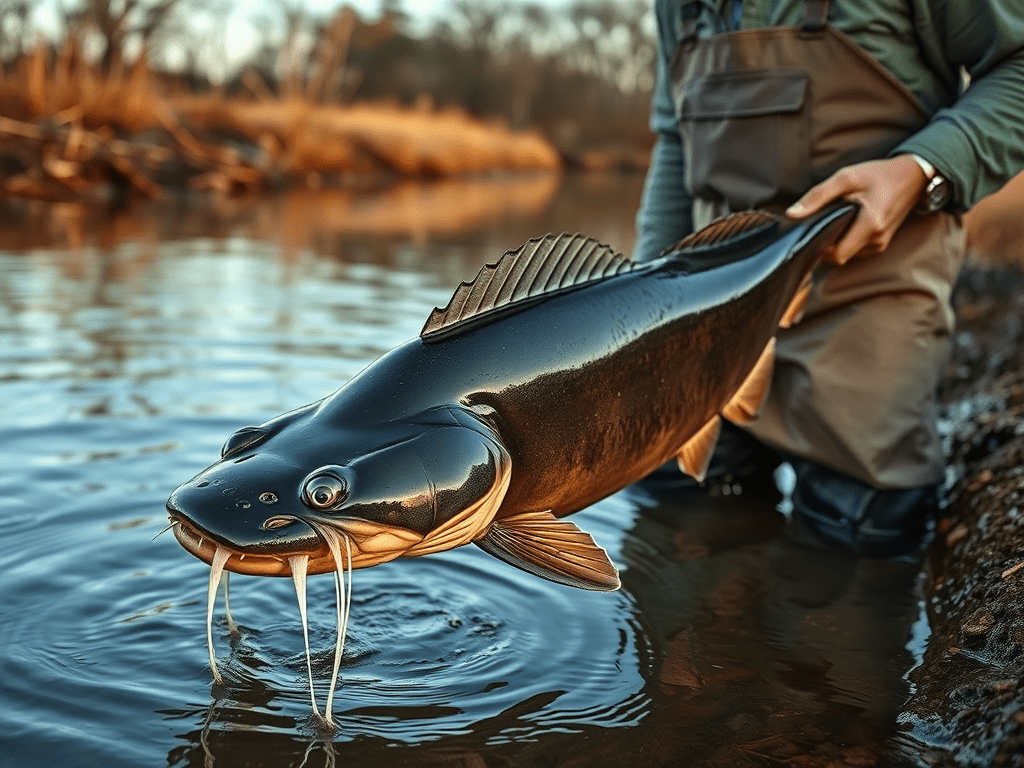
A potential scene for a fiction novel I’m currently writing. Light and illuminating. I’d love to know if it works for you.
byJ.C.White – 2025
Noah informed Elena of his morning plan in the same way a man tells his hound dog he’ll be right back: palm on the doorframe, a smile loose as well-worn twine, the apology neatly folded and tucked into mountain logic. “Trace Creek,” he said. “Couple hours. I’ll bring back something that tastes like river.” She sat at the kitchen table with her elbows in the newspaper and a pencil tucked in her hair as she peeled a bowl of potatoes. She eyed him with that sideways smile that could rope him when she wanted but this morning let him run. He needed some time to his thoughts.
“Be careful,” Elena preached. “My kind of careful, Noah, not your kind.”
He kissed her forehead and caught the lemon-clean smell of the house riding the wave of steam rising from her coffee. The batchelor’s place was bright and small and lately better managed, Elena’s touch on everything. He felt that grateful sting he could never admit, like a good lie that does no harm. He grabbed his keys and the short, coiled fish stringer from the hat peg by the door, his chest waders rolled up like a green serpent in the milk crate he kept by the boot jack, grabbed his pistol and went out.
September light knelt on the hills, half-hushed, the color of butter left on the table. Trace Creek drew down from the heights of Claiborne County as if the world were shaped to pour itself into it, but first there was the errand, the ritual, the way a day like this ought to start: Carver’s Country Market.
Maudine Carver’s store had been nailed together when the county wore a smaller pair of pants. The clapboard bore the colors of weather itself, and the front steps sagged with the memory of men who’d sat there a century waiting on paydays, elections, and a long awaited rain. He loved the old Coca-Cola sign above the door and the scatter of feed sacks by the porch bench, and how a wind chime made of old spoons and door knobs stitched a song that sounded like an Appalachian dirge. The entry bell over the door jamb had the voice of a winter robin, tinny and resilient.
The potbelly stove ticked and popped as if a small animal were trapped inside and negotiating its own release. On the stove sat the blackened kettle that never truly cooled; beside it, the cracked mug with “MAUDINE” painted in a child’s hand, the U sprawled like a hammock. Behind the counter lay the brass register, handsome as an ancient cathedral, its keys fat and ceremonial, the sound of every tap and keystroke burned the buying experience into a lifelong history.
Noah’s boots clicked on the pine floor. He nodded to the glass case with the candy bars stacked in perfect symmetry like soldiers, and the jars of pickled eggs that appeared suspended in precious amber. The aisles were a taxonomy of need and memory: mule harness next to ball caps, a rack of white shirts for funerals and revivals, a shelf of motor oil, a tin of blue salve and purple wound dressing, and, for reasons known to Maudine alone, three novelty snow globes with plastic flamingos inside. The coffee smell lived everywhere, a most agreeable ghost.
“Morning,” Noah said.
The eighty-seven year old, Maudine, stood on a stool reaching into the top shelf to align the tins of snuff so they faced front. She came down as slowly as a cat conquering gravity, stepped behind the third- generation counter, and laid her palms on the worn oak display case like she owned not only the place but the very idea of commercial exchange.
“Good morning, Noah,” he said for her, out of habit, because people in the county had long since taken up answering Maudine before she spoke, the way you adjust your walking gait for an old hound. Maudine spoke in two and three word phrases only. Aloof and direct; she had no time for waisted speech.
She fixed him with that black-eyed appraisal that weighed both soul and pocketbook alike, and the mole on her jaw, big as a grafted finger, cast its own small shadow. Three wiry hairs today, he noted. Sometimes six. Its stubborn life tickled his affection for her.
“Good I-dea, boy,” she said.
He laughed. “Now Maudine, I didn’t even say nothin’ yet.”
She tilted her head. “Fishin’ day, ain’it?”
“You got me.” He drummed his fingers on the counter. “Need some bottled cokes, a bag of pork rinds, and two moonpies. And if you got that jerky I like, the peppered one cut on the bias. Elena’ll want a peppermint if I’m going to smell like fish and creek water when I get back.”
“Same old order,” she said. “Same old fool.”
He put his hand to his heart. “Consistency is a virtue, they say.”
“Virtue don’t bite,” she said.
Something moved in the next aisle, fishin tackle, and Noah stepped around to see a tall man in a checked shirt studying lures like a scholar before his viva. Silas Bullen, attorney-at-most-hours, Detroit expat, five years into his Tennessee practice and still on probation with the grits and biscuits. Silas held a silver spoon lure to the light, let it wink, frowned, then lifted a soft-plastic worm the color of split pea soup and frowned again.
“Look at you,” Noah said. “Trying to sweet-talk a fish with fancy jewelry.”
Silas brightened. “Brother, hallelujah. I was praying for a local guide. The creek’s whispering to me and I don’t speak the dialect. You fishing today?”
“Trace Creek,” Noah said. “Catfish.”
“Catfish,” Silas repeated, as if tasting a word he’d only seen in books. “What’s the play? Livers? Cheese bait? I have never understood the appeal of stinking up a perfectly good Saturday with rotting meat but I’m willing to be converted. Also, do I need weights? Leaders? The internet gave me a list longer than Leviticus.”
“You got chest waders?” Noah asked.
“Chest waders?” Silas’ eyes narrowing. “No. Does that mean I’m not invited to the sacrament?”
“That’s all you’ll need,” Noah said. “Nothing else.”
Silas blinked, pleased and terrified the way a man is when the roller coaster clicks up past the point of reason. “Nothing else,” he said, making a note of the phrase’s suspicious spareness.
“Meet me at the counter when you pick a pair,” Noah said. “Men’s section’s right there. Look for whatever smells like a Stretch Armstrong.”
“Roger that,” he answered, already striding toward the stacked boxes as if enlisting.
Noah returned to the counter. “Put two peppermints on there, please,” he told Maudine. She slid the candies across the glass with a small ceremony, knighting him with sugar.
“Treat her right,” she said.
“I’ll bring her a catfish,” he said. “What more could a gal want?”
“Close enough, honey.”
Silas returned with waders tucked under his arm like a prize country ham. He stood at the counter and grinned at Noah. “I am ready to be baptized.”
Maudine looked him up and down like a cow eyeing a new bull. “City boy, huh?”
“Guilty as charged,” Dick said. “Reformed.”
“Say ‘pop,’” she said.
“Pop.” His upper palate lifting toward the ceiling.
“No; Not reformed,” she said.
Silas laughed. “Ma’am, I accept your jurisdiction and your advice.”
Noah paid and pocketed his change, slid one peppermint into his back pocket with the confidence of a man tucking away a promise. He carried the bag, cokes chinking faintly, rinds rattling. “We’ll be back by supper,” he told Maudine.
“Bring me some,” she said.
“Yes, ma’am, I sure will, a nice fillet.” he said.
“Big thick piece,” she said.
“We’ll aim to oblige.”
She handed him a third peppermint he hadn’t asked for. “For luck, sugar.”
He saluted, and they stepped into the noonish light. The day had warmed; the air had that telltale metallic tang that came only when the iron-rich creekstones heated and exhaled. Noah’s old truck coughed and sniffled, then settled into itself with a gratuitous baritone hum. Silas followed in his own vehicle, still new enough to show its dealer’s handwriting on the tailgate.
The road to Trace Creek wandered, losing the thread and finding it again. They cut past fields stippled with broom sedge and the close-clipped lawns of double and single-wide’s with their satellite dishes tilted like expectant faces. Kudzu poured over old farm fences like a drop-cloth thrown over a sleepwalker. A Steller’s Eagle rose in the valley’s throat and wrote a spiral nobody could read but everybody in sight of it surely felt.
At the pull-off, a muddy scallop of earth tucked behind a hedge of fruited sycamores, Noah parked and killed the engine. The creek spoke from behind the trees and privet: a consistent hush speaking with a magnetic and persuasive consonant. Silas climbed out of his pickup and stood with his hands on his hips, as if acquainting himself with a new country. He could smell it, mineral, leaf-rot, sycamore pollen, something green and forever. A kingfisher stitched across the far bank, unruly and obviously self-employed.
“Where’s the gear?” Silas asked, scanning for rods, tackle boxes, the lay of expectation.
Noah lifted his milk crate, pulled out his own waders, and nodded at Silas’ box. “Put ’em on. We’re walking.”
“We’re… what now?”
“Wading,” Noah said. “Fishing’s hands-on today.”
Silas’ eyebrows did a thing that would have been a somersault if eyebrows were gymnasts. “We’re not using poles?”
Noah smiled the way a father smiles at his son who has just guessed the riddle and stepped one inch past it. “No poles.”
“No worms? No stinkbait? No… technology?”
“Silas,” Noah said. “We’re noodling.”
“Noodling,” Silas repeated carefully, as if trying to pronounce a Slavic consonant. “What’s noodling?”
“Catfish with your hands,” Noah said. “Underwater. Feel along the banks for holes. The big ones live where the bank cuts under and makes a pocket. You find the void, you introduce yourself. Keep your fingers tucked so it can’t chew them, but wag one like you’re a worm that thinks too much of himself. He’ll swallow up your arm because it smells like meat and good luck. You reach in, catch him by the gill plate from the inside. It’ll feel like you’re shoved into a sack of wet sand that wants to fight. Pull him out and don’t let go.”
Silas stared. “He swallows your arm?”
“That’s the short of it.”
“And… this doesn’t permanently damage the arm?”
“Not unless you bring foolishness to the conversation,” Noah said. “It’s abrasive. He’ll thrash. You’ll look like you lost an argument with a bench file. But you’ll still play the piano.”
Silas considered his hands, then flexed his fingers as if counting them in advance. “I’m in, I guess,” he said, because he could not bear the thought of facing the county courthouse Monday knowing that he had stepped away from the kind of story men tell each other when they’re old.
They pulled on waders. The rubber climbed their bodies with a slow, deliberate squeak. Noah tightened his belt and tucked the stringer in again. He handed Silas nothing and Silas accepted the nothing with the full weight of an actual gift.
They pushed through a screen of willow and sycamore into light that had filtered through leaves and become something almost worshipful. The creek lay like braided glass. Sunlight made little coins on the ripples. Noah stepped off the bank and felt the shock of the water take him clean to the shins; it was mountain-cold, honest and argumentative. Silas hissed, a sound that was half prayer and half litigation, and followed Noah.
Gravel rolled underfoot with that slippery mobile treachery that likes to pretend it’s solid. Noah moved with the practice of memory, setting his weight where the current asked him gently to. Silas copied that stance, reading Noah’s body like a map, placing his feet on kin to the same stones. The water lifted the hems of their jackets. The creek said yes to Silas’ legs and no to his hurry.
They reached a run where the bank turned hard and the water had cut a sly channel under a shelf of red clay. Over the years the creek had made itself a den there, a chewed-out room where it could keep its best held secrets. Moss made a skinny beard on the root-work. Noah stopped, put his palm on the bank, and turned to Silas.
“First hole,” he said. “Watch.”
Silas nodded and shut his mouth and opened his eyes wider. Some part of him stood on a sidewalk in Detroit where water came in a tap and fish arrived on plates and the river was a thing best watched from a bridge. But the better part, the part that had come south, was here, ready, prepared to be surprised and possibly broken open.
Noah flattened his hand and eased it into the mouth of the hole. The move had a courtliness to it, a politeness. He slid past cold mud and the slickness of algae and the grit of grit itself. He felt the void take his forearm and tighten around it with cool certainty. Then something moved inside, a drift, a slide, a pressure like someone shifting their weight in a church pew. His heart changed its sound, quieter and stronger.
“Hold,” he said softly. “Quiet now.”
He curled his fingers just so, drew his forefinger out like a shy earthworm, wagged it slow, patient as a preacher. Water ran past his shoulder. The bank’s clay pressed his wrist like a cuff. He felt, then, there, an attentive presence. A bump against the back of his hand, exploratory as a kiss. He smiled, not wide, just enough to share it with the day.
It hit. The catfish lunged with the blind suddenness of thunder. Its mouth swallowed to the elbow, a sheath of sandpaper alive with refusal. The suck clamped down and the head shook, trying to unmake his arm, to grind him into consent. The water thrashed. From where Silas stood, it looked like the creek began to boil.
Noah planted his boots, set his face to the thing, and let some old part of himself, boy, son of this water, knuckle and stubbornness, take the wheel. He jammed his left hand past the mouth and found the gill slit, the thin, living door of it, and he took hold. The fish bucked. He hauled. They came out of the hole together, like something being born that didn’t agree with birth, and Noah swung the fish up in a wet, heavy arc and pitched it into the shallow on the near bank, where it slapped the stones and tried its best to bounce its way back.
He followed, sloshing, laughing under his breath the way men do in church when someone passes gas. He put his knee on the fish’s head, worked the metal spike of the stringer through the gill and out the mouth. The fish made that guttural chuff cats make and he apologized to it, quiet, under the breath he used when he apologized to God. Then he clipped the stringer and let the fish ride in the current like a reluctant kite.
He looked at his wrist. Skin roughed to light meat, a bead-work of blood wicking into the creek. It stung the way a sorrowful truth stings. Silas saw the red and his face arranged itself into astonishment all the way down to his chin.
“Fifteen,” Noah said. “Maybe seventeen if he lies on the scale.”
Silas found his voice. “You just, he just, you…” He laughed, a high school boy’s laugh that had hidden in him for years. “Holy shit! I mean; okay.”
“Your turn,” Noah said.
Silas swallowed. “Then I must insist you find me something smaller than a Volkswagen.”
“We’ll go to the other hole,” Noah said. “Always a fish in there.”
They moved upstream, the current writing new sentences around their legs. The willows leaned in to spread their gossip. Noah stepped onto a bed of fist-sized stones that wobbled and then into a slick belly of clay at the bend where the bank caved in. He nodded with his chin. “There,” he said. “You’ll feel the mouth of it about a foot down. Reach in slow, then bend your wrist and snake it along the ceiling.”
Silas inhaled, squared his shoulders as if entering a courtroom. He slid his hand under. The clay was cold as a preacher’s grip at the graveside. He advanced, knuckles first, then wrist, then the steady insertion of forearm. The sensation turned his skin into an instrument. He felt the crumpled gum-wrapper texture of leaves pushed in and rotting softly. He felt a pebble that had stuck in the roof of the hole like a loose tooth. He felt distance, and in the distance, a type of hush.
Noah spoke low. “Worm him.”
Silas waggled his forefinger. It felt both obscene and illegal. His breath shortened. Time opened like a mouth. He thought, become visible, or perhaps he hallucinated, the movement; the slow, inevitable slide of big muscle coming to consider. Something pressed at his knuckles like the door of a bar swinging out.
Then it happened. An engulfment. A commitment made without word or signature. His hand and half his forearm disappeared into hunger. The pressure arrived total and abrasive; teeth like old files tested his skin. The fish shook its head with the vigor of passionate disagreement; the world became water and weight and the stubbornness of bone.
“Hold him!” Noah sang. “Hold… hold… good. Inside the gill. Go in! Turn! Turn!”
Silas tried to yell and could not, so his face yelled for him. He reached deeper, past the ring of pain, and found the thin scalloped plates, the tough soft feathery moving of them. He yanked a grip there, thumb lodged hard against cartilage, and the fish threw its life against his life with the mindless authority of a steam locomotive. Silas’ boots slipped on the gravel but Noah’s hand snapped to his elbow, then slid to his forearm and braced, both of them in a triangle with the creek, their bodies learning geometry the way men learn to love, by failing first in small ways, then suddenly doing it right.
“Up now,” Noah said. “Up and out.”
They heaved. The thing came with its ballast of water and fury, surfaced slobbering silver-brown, the wide, bearded face of it prehistoric, eyes small and inarguable. The belly gleamed like a fattened bull frog. Silas made a sound like he had been diaphragm-punched in a joke. He tried to sling it like Noah had and found gravity not in the mood. Noah wedged a boot against a rock and shoved at Silas’ waist and together they leaned the fish onto the pebbled skirt of the bank, where it hammered at reality and the slimy beast hammered right back.
Noah dropped a knee on it, pried the mouth open with both hands, hollered “now,” and Silas pulled his arm free with a wet unzip. Blood ran in handsome, unmistakable stripes down to his wrist, where it gathered in maroon buttons and leapt off into the creek in bright coins. The skin looked as if it had negotiated with sand and lost the debate. Silas stared. He grinned. He almost cried.
“Thirty,” Noah said. “Maybe thirty-five if he eats a biscuit between here and the scale.”
Silas blew out a breath like a decade trapped in his diaphragm . “I think I saw my mother,” he said, and then he started laughing, the kind of laughter that binds men. It went to his knees. He put the back of his unbloodied hand to his eyes and held his head like it might otherwise float off and leave his life behind.
Noah threaded the stringer spike into the fish’s gill, out its wide fountain of a mouth, and clipped it beside the first. He lifted the two with one arm and felt their combined argument tug at his shoulder. “Now we quit,” he said. “While the creek and God still like us.”
“You told me I’d need nothing,” Silas said, looking at his arm with a scandalized pride. “You provided everything and somehow also nothing. That’s a lawyer’s trick if I ever saw one.”
“You bought the waders,” Noah said. “That’s the lesson. Dress for the baptism you want, not the one people expect.”
They stood for a minute in the water, letting the current wash the worst of the blood into the larger blood of the world. Sunlight found the suspended silt and made new galaxies. A snappin turtle’s head appeared fifteen feet downstream and gave them the respectful but jealous blink of a supportive neighbor. Noah’s wrist stung with a bright and reasonable pain. He felt alive in a way that required no witness.
Silas flexed his fingers in the water. “You call this noodling,” he said. “Back home we’d have called it a felony.”
“It’s older than the law,” Noah said. “Way older.”
On the walk back through the willows and sycamore, Silas kept touching the punctures and rasped lines on his forearm, intrigued and appalled the way people get with scars they secretly wanted. “Am I going to get tetanus?” he asked cheerfully, which was new.
Noah shook his head and grinned. “You’ll get supper. That much I know.”
They shed the waders by the trucks, each man peeling out of rubber like a snake disinvesting itself of a long-held sheath of skin. Noah slung the stringer over his shoulder. The fish hung behind him like prizes he refused to brag about because bragging would make smaller the light of the day. Silas carried his waders to the bed of his truck, and climbed into his truck with the caution of a man newly aware of his mortal parts.
Back at the market, the bell rang again, and Maudine looked up from a stack of feed store receipts written in pencil on a yellow ruled pad. The room glowed a little, maybe the afternoon, maybe the fish.
“Y’all Back already?” she said.
“A quick day’s work, Maudine,” Noah said.
She saw the fish. Her eyebrows made a human sunrise. “Lord have mercy.”
“Two fillets for you,” he said. “As promised.”
Silas came in behind him, his banded arm visible where he’d pushed up his sleeve to stare at it on the drive. Maudine’s gaze dropped to the pink tassels of skin. She nodded once, the official nod of a county whose seal might as well be a bloody bandage.
“New man now,” she said.
“Born again redneck,” Silas said.
“Twice dunked, honey.”
Noah took the peppermint from his pocket and unwrapped it for himself. He grabbed a couple more for Elena. He leaned on the counter for a second and listened to the stove tick and the register dream its bronze dreams and the wind chime resume its inarguable domestic theology out on the porch.
“You’ll Tell Elena,” Maudine said.
“What should I tell her?” he said.
“Marry her; soon,” she said.
Noah smiled. “I’ll pass it along… when it’s right.”
“Pass with flowers,” she said.
“We’ll see if Trace Creek grows roses,” he said.
“Roses, thorns, both,” she said.
Outside, the afternoon had shifted toward kindness. He split the stringer, gave Silas his fish with a formality that felt older than the county, and clapped him on the shoulder.
“Now you’re a real country boy, Silas,” Noah said. “You’ll never go hungry as long as you know how to noodle.”
Silas held the fish and the day like he wasn’t ready to set either down. “My mother used to say that the city made you forget certain truths and the country made you remember them,” he said. “I feel like I remembered something I didn’t even know I knew.”
“Just don’t forget your tetanus shot,” Noah said, and Sila barked that laugh again, surprised he had more of it in him. He loaded the fish. They promised to meet later to clean them by Noah’s shed, the old cypress table scarred and salted from a hundred such afternoons.
Noah headed home with the peppermint on his tongue and the creek still on his skin. He felt the day’s weight on his shoulder where the stringer had pulled. It was a pleasant debt, the kind that keeps a man honest. He thought of Elena, how she’d step out on the porch when she heard the truck and pretend not to be delighted. He would lift the fish and see her eyes take in the size, the simple arithmetic of it, this into that, hunger into supper, risk into story. He would tell her how the big one had taken Silas to the very edge of his city and made him step off. He would not say how the creek had made Noah a boy again for fifteen seconds in the dark of the hole, when the thing had taken his arm and he had felt the old joy and the old fear braid together and call itself living. He would not say how he felt when he imagined Silas to be his dead brother Michael, how noodling had been a favorite pastime of the two kids before that day; before the snake bite.
At a stop sign he looked down at his wrist. The water had cleaned the blood, leaving raw commas and a grammar of scrapes. He flexed his fingers. Pain answered. He smiled and drove on, no music, windows down, the day unfurling like an award ribbon someone had saved since childhood, pulled out now for confidence.
By the time he pulled into the drive, the sun had turned toward its good work in the west. Elena stepped onto the porch, hand shading the eyes that didn’t need shading, and Noah lifted the fish like a promise magically turned into proof.
“Well,” she said, “if it isn’t providence.”
“Providence had help,” he said.
She came down the steps and kissed the corner of his mouth and said, “You’ll want the butcher knife sharpened. There’s lemon and cornmeal waiting. And I’ll allow one fish story for every fillet.”
“Then you better sit,” he said. “It was a large day with a short window.”
Behind him, a wind traveled the field beyond, moved the pines, wrote something on the surface of the world that no one ever takes time to translate. The creek’s cold still clung to his bones. He felt the simple moral of it, as plain as a peppermint passed at the counter: if a thing keeps itself under the bank, sometimes you got to go under the bank and fetch it. He went inside to wash, the sting still singing its reminder, the house bright with Elena’s lemon light, and the day rolled on, full of more mercy than a man deserved and exactly as much trouble as he needed.


Responses
A bloody good read
LikeLiked by 1 person
Why thank you Joanne.
LikeLike
I loved this, every moment. There are many beautiful phrases in this, but I think my favourite is “he had felt the old joy and the old fear braid together and call itself living.”
LikeLiked by 1 person
Thank you so much!
LikeLiked by 1 person
This is wonderful, Chris. A credit to any work it becomes a part of.
LikeLiked by 1 person
Thank you Violet.
LikeLiked by 1 person
It certainly makes the reader feel like they are standing off to the side watching.
LikeLiked by 1 person
Good to know Diana. Thank you.
LikeLiked by 1 person
A brilliant story. Do I detect you have been there, done that?
LikeLiked by 1 person
Yes, of course. I grew up with a creek across the street that’s confluence with a lake was only 500 or so meters away. This was before pedophiles were invented, so our parents allowed us to be feral. We spent most of our summers catching snakes and crawfish and catfish. I’m smiling as I write this; the product of fun times or child neglect, depending on where one stands.
LikeLiked by 1 person
Great childhood times. I had similar here in the UK. Shame our kids can’t experience such freedom.
LikeLiked by 1 person
True statement. But we can always write about it. Thank you for the kind connection. I’m sure we’ll be trading fish stories soon enough.
LikeLiked by 1 person