
byJ.C.White – 2026
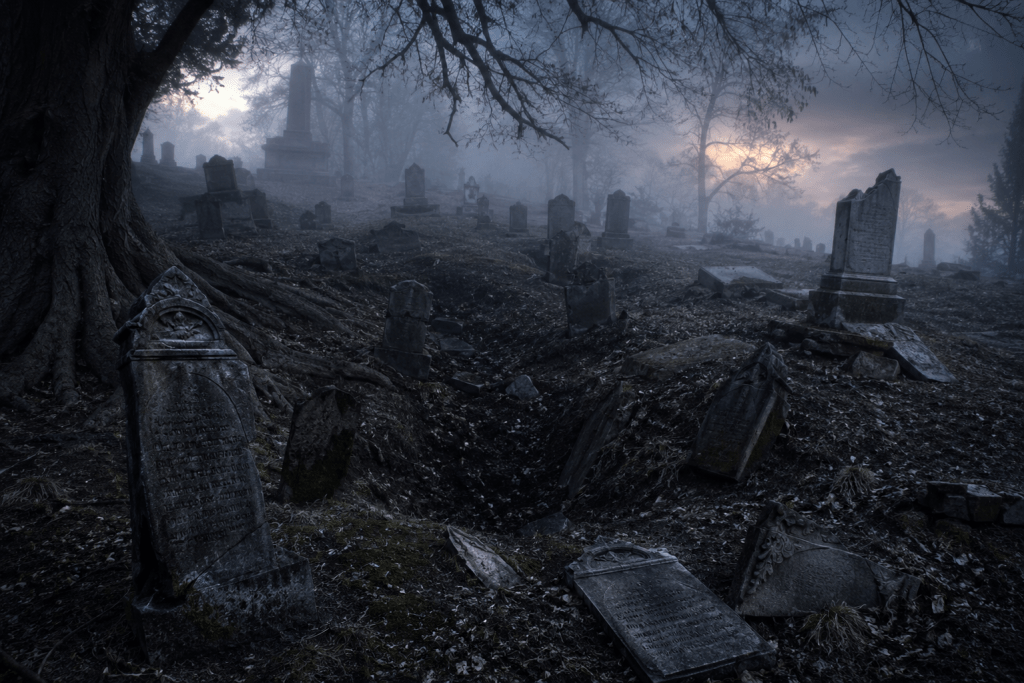
There is an old oak standing at the edge of a forgotten Tennessee field where a quiet man sometimes comes to sit and read. Not some ordinary field. A field littered with broken pieces of carved granite and marble, barely marking the graves of men that history would just as soon forget.
The quiet man knows the spot. A sunken sliver of earth with a stone marker at each end, one with simple eroded initials, and the other end with the base of what was once a simple marker, honoring a simple man, that no one piece bigger than a playing card still exists.
No remaining monument bears his name. No schoolchild lays flowers there in April. History has little patience for men like him. It remembers presidents, generals, and speeches. It remembers victories and defeats. It seldom remembers the frightened nineteen-year-old who marched because every other boy in his county marched, because his father handed him an old rifle, because leaving town felt more shameful than staying and fighting for something he couldn’t understand.
He’d never owned another human being.
It would be more honest to say his family had never owned much of anything.
Perhaps a mule when fortune smiled. A patch of corn that surrendered more rocks than ears. Enough bacon to last until Thursday if no one asked for seconds. That’s all the man ever owned.
He returned four years later to a house whose chimney still stood though the roof did not. The smokehouse had been emptied. The livestock stolen by soldiers from both uniforms. The orchard hacked apart for firewood by men who had forgotten how to love.
He’d lost his hearing from cannon fire. His sister no longer laughed as she once had. His mother startled whenever boots crossed the porch. His father, who had survived the war at home, somehow looked younger than the son who’d fought it.
People later asked what side he had been on. No one ever asked what it had cost him to pick one. No one ever asked him why he chose the side he chose? He couldn’t have answered the question if he’d wanted to. He didn’t want to.
So, he sat beneath the oak in the strange stillness of an Indian summer, when autumn had forgotten itself for a few borrowed days. He was thirty-nine and finally taking the time to learn to read.
The leaves had surrendered their brilliance. The scarlets and golds had washed into a common brown. A crow complained from somewhere beyond the fence line, and a squirrel scolded the whole creation with the confidence of a king whose kingdom consisted of ten dozen acorns.
The air smelled of damp leaves and limestone and woodsmoke and the clothes he’d been wearing unwashed for a week.
Everything around him seemed determined to return quietly to the earth.
He thought of the boys who had never grown old enough to become difficult men. Faces arrived in his mind more readily than names now. One had died laughing. Another praying. Another calling for his mother with such ordinary desperation that the horrible sound of it had followed him home more faithfully than any comrade.
The war had spared his body. It was unwilling to spare the beautiful things within it.
Before the war, he believed every spring was a promise. That every child born beneath a clean sky carried a future too large to measure. That goodness was as ordinary as daylight.
The war didn’t teach him evil.
It taught him how much beauty that evil was willing to waste, proving a point that should have been obvious.
And that, perhaps, was the only victory to have been had.
Years later, someone would raise a statue to a famous man. Children would look up at bronze features polished smooth by rain, and appreciative fingers, and pigeons, believing they had seen in the statue a glimpse of their own history. But stone remembers only posture. Marble remembers only the shape of a face, not the mind within.
Books remember something altogether different. A book can preserve the hesitation before a man lies. It can preserve the sound of men’s boots on a front porch after midnight.
It can preserve the smell of wet wool, the weight of guilt, the silence between a father and son who no longer know how to speak to one another.
It preserves not merely what happened, but what it felt like to be alive while it happened. That is why books outlive statues.
A statue survives by resisting time.
A book survives by entering another human mind and beginning life all over again.
Every reader becomes another season in which its seeds may grow.
That is the miracle that I so foolishly attempt today. Statues decay. Portraits fade. Even memory fails. But words, when they tell the truth about what it means to be human, continue reproducing themselves in the minds of strangers long after every witness has fallen silent, and they lay in the sunken ground marked by broken granite.
That is why we read.
Not merely to know what happened.
But to rescue from oblivion the beautiful inventions and words and moments and people and minds that history is forever trying to bury.


Responses
What a hauntingly beautiful and deeply human piece. 🍂
The opening image of the old oak standing beside forgotten graves immediately creates a powerful atmosphere, but it is the quiet humanity of the story that stays with me. History often remembers the famous names—the presidents, generals, battles, and victories—while forgetting the ordinary young men who were swept into events far larger than their understanding.
LikeLiked by 1 person
Thank you, Verna-ji
LikeLiked by 1 person
I absolutely love this piece of writing by Chris White (J.C. White). A small section,in particular, is so profound. Although the subject matters, relates to war conflict; I find I can transcribe it, to my own childhood, growing up among and with family conflict. Wonderful piece Chris. I’m glad I read it.
LikeLiked by 1 person
Thank you very much, you’re too kind.
LikeLike
Beautifull written, truthful post.
LikeLiked by 1 person
Thank you, Jean. I’ve been working to get my second book ready to publish, so my blogs have been sparse, at best. But I don’t think I’ll ever stop. Sometimes, we have these ideas that aren’t near broad enough to become a book but deep enough that they should be told.
LikeLiked by 1 person
love it!
LikeLiked by 1 person
Thank you!
LikeLike
One fine piece of writing, thanks for sharing.
LikeLiked by 1 person
Thank you, Bill.
LikeLike
Very moving. It makes you glad you have not had to go through such a thing.
LikeLiked by 1 person
Thank you!
LikeLike